
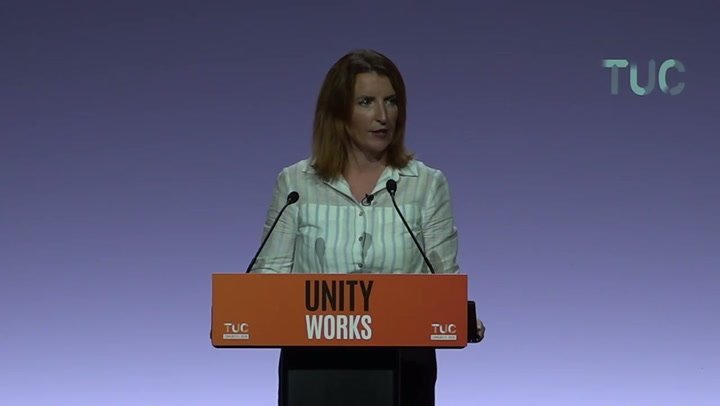
On 15 September 2026, First Secretary of State Louise Haigh told the TUC Congress in Brighton that the government intends to strengthen the right to request flexible working. Bosses who want to turn down a request, she said, will have to sit down with the employee, properly consider it, and explain why. Not a form letter. Not a one-line refusal. A meeting, and a reasoned answer.
It’s a strong soundbite, and it has understandably been picked up everywhere. But if you’re currently facing a flexible working refusal, or wondering whether to put in a request at all, it’s worth being precise about what this actually changes today, and what it doesn’t, because the two are easy to blur.
What was announced, and what it wasn’t
This was a speech to a trade union conference, not a piece of legislation. Ms Haigh set out an intention: employers who reject a flexible working request should have to meet the employee, genuinely weigh the request, and set out their reasoning. No bill was published alongside it, and no date was given for when it would take effect. Political commitments of this kind can move quickly, slowly, or not at all, and it would be a mistake to treat a conference speech as if it were already law.
That matters, because there’s a real risk of confusion here. Some of what Ms Haigh described sounds very close to something that is already on the statute book, just not yet in force. It’s worth separating the two clearly.
What is already locked in, and coming in 2027
The Employment Rights Act 2025 received Royal Assent on 18 December 2025, and it already contains reforms to flexible working that go a good way toward what was described at the TUC Congress. These are due to take effect in 2027, following secondary legislation, and unlike the speech, they are enacted primary law:
- A new statutory reasonableness test. At present, an employer can refuse a flexible working request by citing one of eight statutory business reasons, for example the burden of additional costs, or an inability to reorganise work among existing staff. Once the 2025 Act’s provisions come into force, citing a reason will no longer be enough on its own. The employer will have to show that relying on it was reasonable in the circumstances, and explain that reasoning in writing.
- A mandatory consultation step. Where a request cannot be granted immediately, the employer will be required to hold a meeting with the employee, without unreasonable delay and within the existing two-month decision window, before any refusal. The meeting has to be a genuine one: exploring the request, considering alternatives, and thinking about whether it should also be treated as a request for a reasonable adjustment where disability is in play.
- A written record and a written decision. The employer must keep a record of the consultation and confirm the outcome in writing.
- Wider grounds to bring a tribunal claim. The current law lets a tribunal look at whether an employer complied with the process. The 2025 Act changes the test to whether the employer acted in accordance with its obligations, which is a broader standard and makes it easier to challenge a refusal that was procedurally hollow, even if a business reason was technically cited.
None of this is speculative. It’s in force by statute, with detail still to be filled in through secondary legislation and non-statutory guidance. What Ms Haigh described at the TUC Congress reads as a restatement of that direction of travel, aimed at a union audience, rather than something separate or new.
What the law says right now, today
None of the above has commenced yet. Until it does, the position remains what it has been since April 2024:
- Every employee has the right to request flexible working from day one of employment. There is no longer a qualifying period.
- You can make up to two statutory requests in any 12-month period.
- Your employer must respond within two months, unless you both agree to extend that.
- You are no longer required to explain how the request might affect the business. That burden has shifted toward the employer.
- Your employer can still refuse, but only for one of the eight statutory business reasons, and a tribunal can currently consider whether the correct procedure was followed. It cannot yet examine whether the underlying reason for refusal was reasonable. That’s the gap the 2027 changes are designed to close.
If your request has just been turned down and you’re wondering whether you have grounds to challenge it, this is the law that applies to your situation now, not the 2027 version.
What this means if you’re in the middle of it
A flexible working refusal rarely arrives in isolation. It often follows, or precedes, wider friction: a change in personal circumstances the employer resents accommodating, a manager who has already decided the answer, or a process that looks procedural but was never really open to persuasion. If that sounds familiar, a few things are worth holding onto.
Check the process, not just the outcome. Even under the current law, your employer has to follow a fair procedure and respond within the statutory timeframe. A refusal that skips proper consideration, or that arrives without any real engagement with your reasons, is worth scrutinising on its own terms, separately from whether you agree with the substance of the decision.
Get the reason in writing, and keep it. Whatever your employer says now, in a meeting or informally, ask for the stated business reason in writing. It becomes the anchor point for everything that follows, including any future claim.
Don’t assume a flexible working refusal is where this ends. In our experience, disputes over flexible working requests often become the first flashpoint in a deteriorating relationship that later surfaces as a grievance, a performance process, or worse. If that’s the direction things are heading for you, the flexible working paper trail you build now is evidence you’ll want later.
Watch the calendar, not just the headlines. The 2027 reforms will matter enormously once they commence, particularly the reasonableness test. But if your situation is live today, you’re working within the current framework, and it’s worth understanding exactly what that does and doesn’t require of your employer right now.
Where we come in
We don’t handle flexible working requests as a standalone service, but we see them constantly as part of wider disciplinary, grievance and appeal casework, because they are so often where things start to go wrong. If a flexible working dispute has become part of a bigger picture at work, whether that’s a grievance you’re raising, a disciplinary process you’re facing, or a relationship with your employer that feels like it’s collapsing, we can help you understand where you stand and what your options are.
Free consultation, fifteen minutes, no cost and no obligation.
Sources: Louise Haigh, TUC Congress, Brighton, 15 September 2026 (reported by PA Media, AOL and LBC); Employment Rights Act 2025 (Royal Assent 18 December 2025); Employment Rights Act 1996, sections 80F to 80I, as amended by the Employment Relations (Flexible Working) Act 2023 (in force from 6 April 2024). Statutory positions verified 16 September 2026 and should be re-checked before relying on them, as secondary legislation for the 2027 changes is still being finalised.
Zhan Associates is a trading name of Zhan Enterprises Ltd, registered in England and Wales, Company No. 11849088. Zhan Associates is not a law firm and does not carry out reserved legal activities. We do not provide legal advice.